- Looking for Pharma Franchise
- +91 9814806440
- gnovabiotech@gmail.com

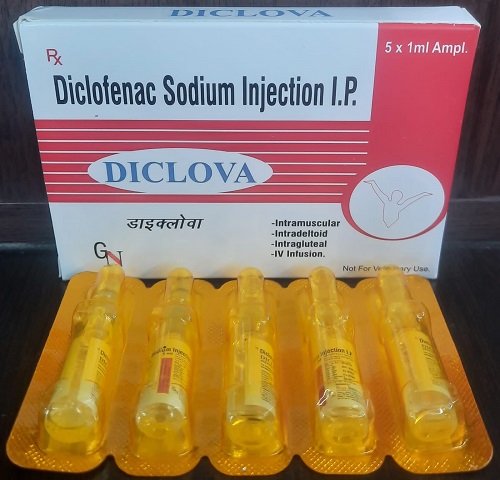
Diclofenac Sodium Injection
DICLOVA
Diclofenac Sodium Injection is available with the branding “DICLOVA” and helps alleviate pain in conditions including flare-ups of back and joint pain, attacks of gout, gallstone pain, kidney stone pain, injuries, trauma, fractures, and post-surgery pain.
Diclofenac Sodium Injection consists of ‘Diclofenac’, which acts by blocking the production of some chemical messengers responsible for pain and inflammation. In this way, this medicine facilitates relief from pain.
Medical Benefits
- This medicine is a class of medications known as Non-Steroidal Anti-Inflammatory Drugs (NSAID) that are taken to ease pain in conditions like joint and back pain flares, gout attacks, pain induced by gallstones, kidney stones, injury, trauma, fractures, and post-operative pain.
- It consists of ‘Diclofenac’, which acts by blocking the formation of some chemical messengers that cause pain and inflammation. Thus, it helps in alleviating pain.
Directions for Use
- Diclofenac Sodium Injection should normally be administered by a physician or nurse by injection into a muscle.
- Do not self-administer unless instructed and trained by a healthcare professional.
- Take the dose and schedule precisely as directed by your physician.
- Notify your physician if you experience pain, redness, or swelling at the injection site.
Storage
- Store in a dry, cool place away from direct sunlight.
- Store at room temperature unless otherwise indicated on the label.
- Out of reach of children and pets.
- Do not use the injection beyond the expiry date stated on the label.
Precautions
- Tell your doctor if you have a history of stomach ulcers, kidney, liver, or heart disease.
- Inform your doctor if you are pregnant, intending to become pregnant, or breastfeeding.
- Avoid alcohol during the use of Diclofenac as it could enhance the risk of stomach problems.
- Avoid other NSAIDs (such as ibuprofen) with Diclofenac Sodium Injection unless your doctor recommends otherwise.
- Inform your doctor about all the drugs you are taking to prevent dangerous interactions.
Side Effects
- Vomiting
- Heartburn
- Stomach pain
- Nausea
Frequently Asked Questions (FAQs)
Does this injection make you sleepy?
It may make you sleepy, but this doesn’t happen very often. If you are taking other medicines or have some medical issues, it could be more likely. If you become very sleepy, speak with your doctor.
Does this medicine make you high?
No, it’s a painkiller that reduces swelling and pain, but it doesn’t touch your mood or make you feel “high.”
Is this injection a narcotic?
No, it’s not a narcotic. It’s an NSAID (nonsteroidal anti-inflammatory drug), meaning it relieves pain and swelling but is not addictive.
Can this composition be taken for a long time?
It can be taken long-term, but only if necessary. Physicians attempt to maintain the dose low and the duration brief since its prolonged use may have side effects such as belly pain, kidney issues, or cardiac problems. Your physician will monitor you if you require it for some time.
Can I take other medications while receiving this medication?
Yes, but tell your doctor about all the medicines you’re taking. Some drugs can react with each other, so your doctor will help make sure it’s safe for you.
Related products
Looking for Pharma Distributorship ? Call us on +91-9814806440